As I planned my writing schedule for an upcoming presentation, I thought that this would be a good time to survey the process required for submitting and presenting a conference paper.
The required elements within a conference paper differ by discipline, so what follows reflects my experience in biblical/theological studies circles.
What is it?
In the end, an accepted paper is approximately 10 pages of double-spaced text, resulting in a 20–25 minute presentation followed by 5–10 minutes of discussion.
The topic varies depending on the author’s interest and the scope of the conference or session. Of course, the more familiar you are with the topic and relevant scholarship, the better the paper and ensuing discussion.
The Process
Conference Prep: The first step is deciding which conference to submit to. Most conferences (e.g., Society of Biblical Literature; Institute of Biblical Research) have sessions that focus on a topic or field (Luke-Acts, Pauline studies, Second Temple Judaism, etc.). Annual meetings are larger, so they have more (and larger) sessions, while other regional meetings or symposiums have fewer. With a conference and session in mind, we now turn our attention to the proposal.
Proposal: For the purposes of this post, the conference comes before the proposal, but the order is fluid. Sometimes you have a topic or proposal draft that aligns with a particular conference session, but other times, a session topic or focus inspires the paper.
The proposal is typically no more than 500 words and highlights the gap in scholarship, the research question, and your research method. Pretty straightforward.
Paper: As stated above, the paper will be approximately 10 pages long. Due to its shorter length, these papers can come together rather quickly, although the key is to go to the depth expected, both within scholarship as a whole and the specific field of your topic in particular. This has been one of the most important learning experiences for me, but I’ll explain that more in a later post.
Once again, experience may vary on when the paper is written. For Ph.D. candidates and credentialed scholars, the paper can be written at any point prior to the date of presentation. This is the typical order (proposal, paper, presentation), but it can change for undergraduate and graduate students. For example, regional meetings often require the full paper to be submitted with the proposal to be judged as a whole, along with a professor’s recommendation. In my experience, submissions to annual meetings only require a proposal, regardless of one’s status, but I have not had a paper accepted for an annual meeting. Yet…
Back to the paper I’m currently working on.
This conference is in mid-April, and the proposal was due on December 1st last year. I was notified that my paper was accepted in the first week or so of January, and here I am writing the paper in the second full week of March. Therefore, according to the ever-truthful, always dwindling countdown clock on my homescreen, I have over 30 days until the presentation. Between classes, doctoral application updates, and life, it worked out perfectly to use my break this week to finish my paper.
Earlier this week, I spent some time working on an outline and compiling raw data, which I will begin comparing with Josephus tomorrow. So far, the only things I have to show for my work are a table I created that spans two pages and a list of phrases from Acts that I’m interested in, which is another page or so.
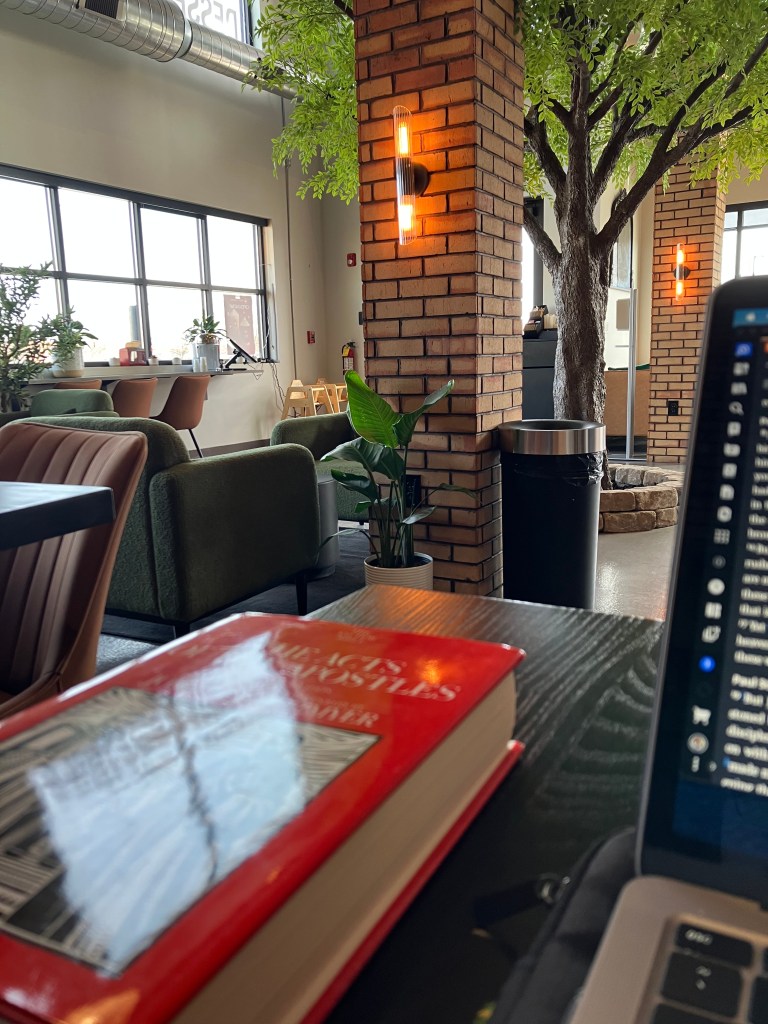
Yesterday, I spent a few hours at a local coffee shop, made even more progress on a potential outline, and gained more clarity on the question my paper will address. This was the first time I consulted a few secondary sources, and I left with a much better sense of where everything is heading.
To this point, I have around 8 pages of text inserted into their respective sections. These sections provide a lot of freedom as I set aside time to finish the paper, because now I can spend shorter periods of time focused on one section rather than refining the structure more generally.
My goal is to have this paper finished in the next week so that I will have four weeks for feedback, edits, and preparation for the presentation.
Here we go.
 Daniel Dicken
Leave a comment